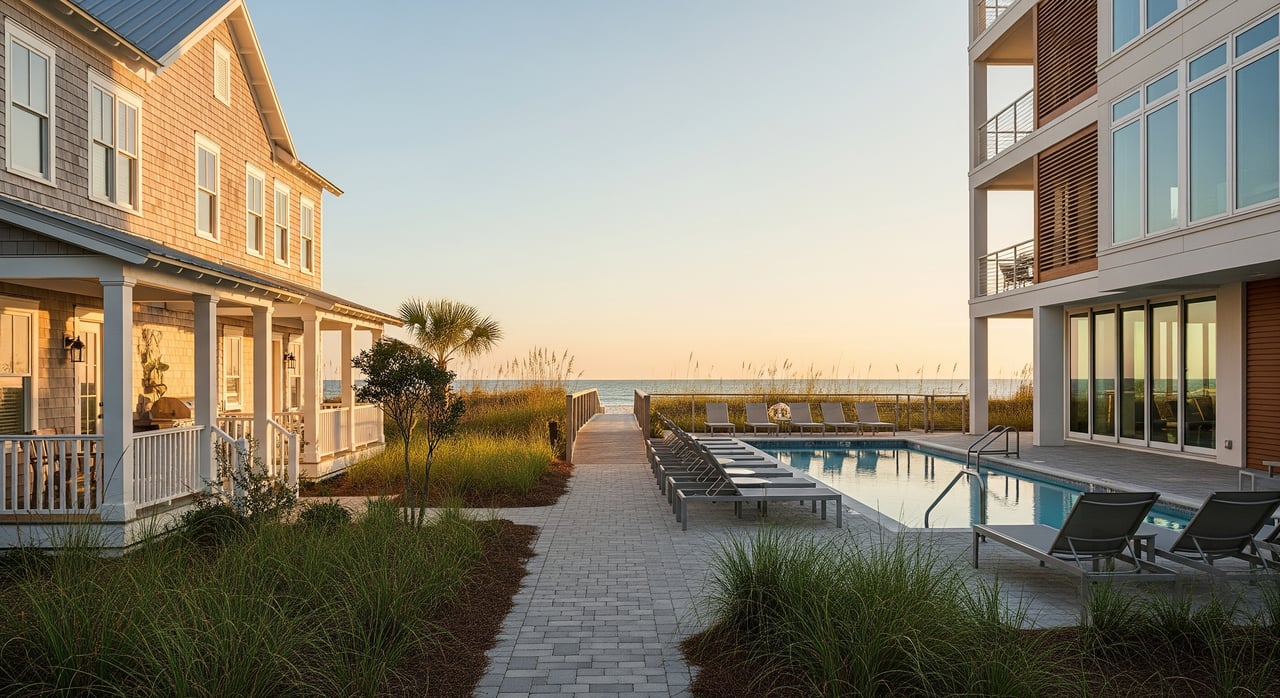
Carolina Beach HOA vs Condo: What Buyers Should Know
December 4, 2025
December 4, 2025
Trying to decide between an HOA neighborhood and a condo building in Carolina Beach? You are not alone. Coastal properties come with unique rules, fees, and insurance needs, and the choice you make will shape your budget and daily life. In this guide, you will learn how HOAs and condo associations differ, how fees and insurance work at the beach, and what to check before you buy. Let’s dive in.
Condominium associations govern buildings where you own your individual unit plus a fractional share of the common elements. The association maintains the exterior, roof, and shared systems, and enforces the declaration and rules.
Homeowners associations, often within planned communities, typically cover common-area upkeep and amenities while you own and maintain your home and lot. The HOA enforces community covenants and architectural rules.
In North Carolina, both are guided by recorded documents and state law. Your experience will come down to what the documents say, how the board manages the property, and the coastal realities of Carolina Beach.
Condo owners usually do not handle building exteriors. The association takes care of the roof, exterior walls, elevators, hallways, and shared systems. Limited common elements like balconies or assigned parking may still be maintained by the association based on the documents.
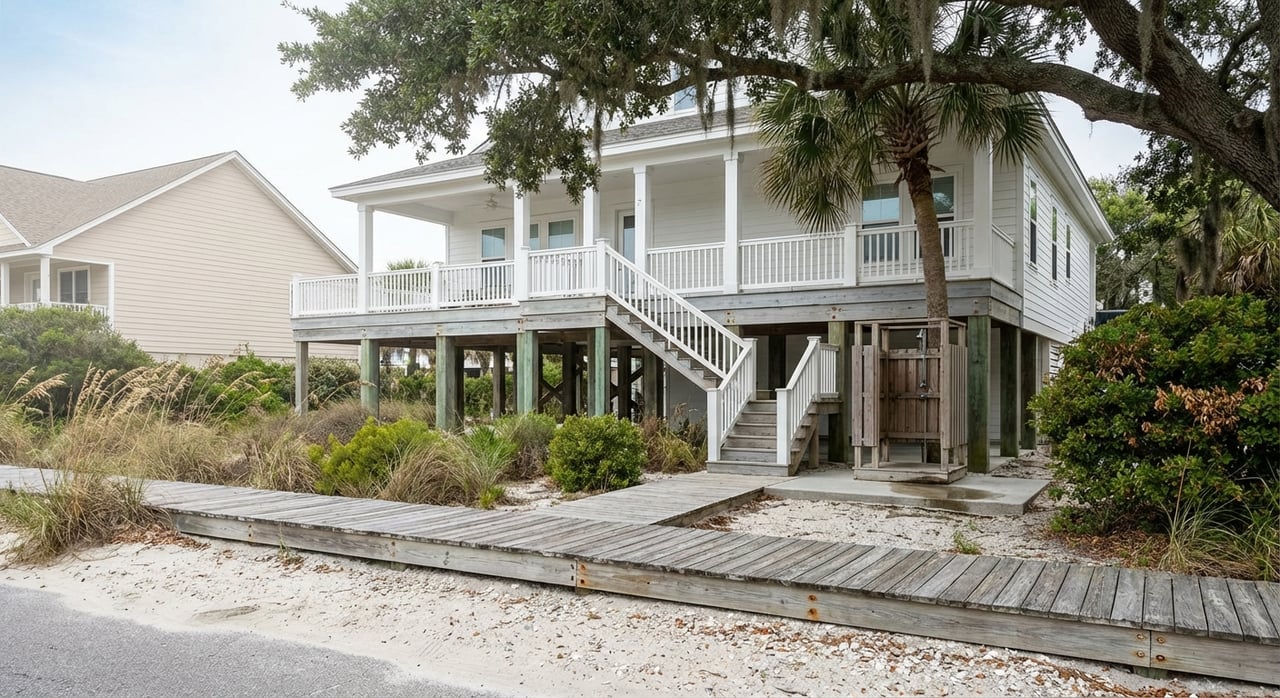
HOA homeowners are usually responsible for the structure of their house, including the roof and exterior painting. The HOA maintains common grounds, private roads, landscaping, and shared amenities.
If you want low-maintenance living, a condo can be appealing. If you prefer control over your own building and finishes, an HOA community may fit better.
Condo assessments tend to be higher because they fund building insurance, exterior upkeep, common utilities, elevators, and sometimes water, trash, or bulk cable. These costs can be more volatile when insurance markets or building needs change.
HOA dues are often lower, since you maintain your own home’s exterior and carry your own dwelling insurance. Dues typically cover common-area landscaping, private road maintenance, and amenities.
Reserves matter in both structures. Condos usually need larger reserve funds for roofs, siding, balconies, and major systems. Thin reserves increase the chance of special assessments. HOAs can levy special assessments too, often for road resurfacing or amenity repairs. Review reserve studies and the history of special assessments before you commit.
Condo buildings carry a master policy that insures the structure and common elements. You will likely need an HO-6 policy for your personal property, interior finishes that the master policy excludes, and loss assessment coverage. The exact boundaries of coverage depend on the condominium documents.
In an HOA, owners typically carry a standard HO-3 policy that insures the dwelling and contents, while the HOA insures only common areas. Budget for your own wind and liability coverage.
Coastal exposure changes the math. Many associations have wind or hurricane deductibles that are percentage-based. After a storm, a large deductible can trigger owner assessments. Ask for the master policy and deductible details, and confirm whether wind coverage is included or handled separately. Flood risk is also a factor near the ocean. If the property is in a FEMA-designated flood zone, lenders usually require flood insurance. Even homes outside mapped zones can face storm surge. Compare NFIP and private flood coverage options.
If rental income is part of your plan, read the association rules and local requirements carefully.
Lenders and insurers may treat heavy rental buildings differently. High investor concentration can affect condo project eligibility, and short-term rental use can change underwriting or insurance requirements. Confirm what is allowed and what your lender will accept before you buy.
Daily life can feel different in a condo building compared to a single-family HOA community.
Gather these documents and answers during your contingency period. They reveal how stable and well-run the association is.
Documents to request:
Key questions to ask:
Red flags to watch:
Carolina Beach faces flood and wind exposure. Parts of town may be in AE or VE flood zones. A mapped zone often means a lender will require flood insurance, but even off-map areas can be at risk. Ask for elevation, past claim history if available, and current flood policy details.
Hurricane readiness matters. Ask about storm preparation protocols, emergency communication plans, and how common areas are secured. In condos, building envelope projects like roof replacements, siding upgrades, balcony repairs, and elevator modernizations are significant and should be planned for in reserves.
Parking and storage are also practical coastal issues. Beach communities can have limited guest parking and strict rules on boat storage and vehicle types. Verify what is permitted for your vehicles and gear.
Condos can face more lender scrutiny than single-family homes. Some loan programs evaluate owner-occupancy levels, investor concentration, reserve funding, insurance coverage, and litigation. If you plan to use FHA or VA financing, confirm project eligibility early or make sure your lender can underwrite the project.
Build in time to receive resale disclosures and association documents. Read them closely or have a local attorney review them. Your agent can help coordinate documents and guide you through what is typical for Carolina Beach and nearby coastal markets.
If you want a lock-and-leave lifestyle with minimal exterior upkeep, a condo association may suit you. Expect higher monthly assessments that cover building insurance and shared systems, plus more rules around rentals and renovations.
If you prefer control over your home’s exterior and a potentially lower association fee, an HOA community can work well. Plan for your own dwelling insurance, roof and exterior maintenance, and any architectural approvals.
Either way, your best decision will come from the documents and the numbers: what dues cover, how reserves look, what insurance costs and deductibles are, and whether rental rules support your plans. If you would like local, hands-on guidance from a broker who knows Carolina Beach associations inside and out, connect with Renee W Reitzel.
Stay up to date on the latest real estate trends.




Whether you’re ready to start or just have questions, Renee is here to help. Reach out today to get one step closer to your Carolina dream.